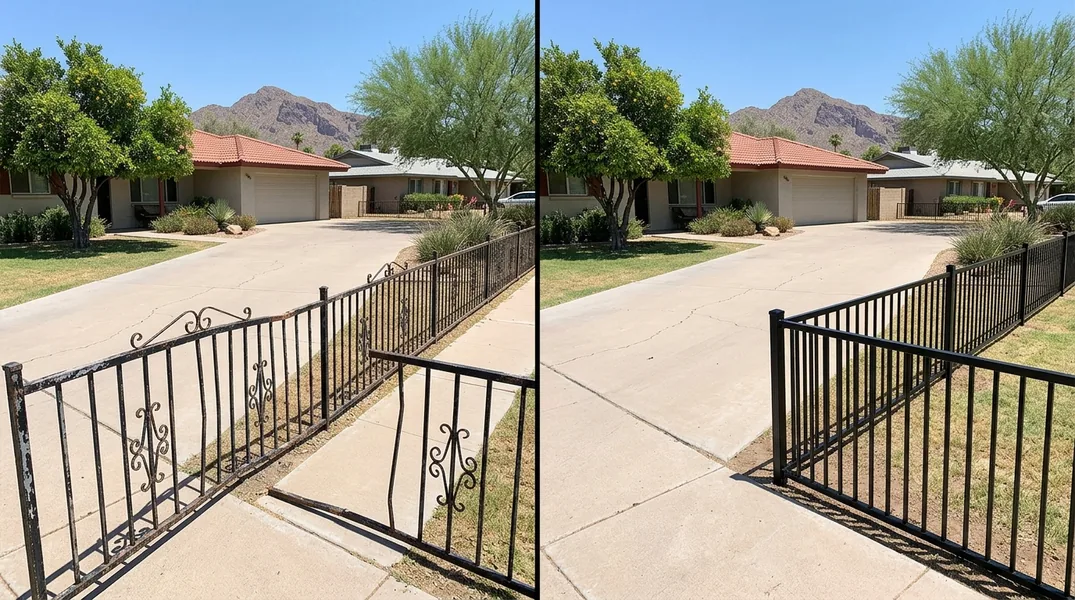
Understanding Your Fencing Options in Phoenix
Choosing the right fence for your Phoenix home is one of the most important decisions you'll make as a homeowner. Your fence defines your property, enhances curb appeal, and provides security and privacy for your family. However, with three major fencing materials available, each with distinct advantages and drawbacks, the decision can feel overwhelming. The climate in Phoenix presents unique challenges that make material selection especially critical. Extreme heat, intense UV radiation, occasional dust storms, and minimal rainfall all impact how different fencing materials perform over time.
Whether you're building a new fence or replacing an aging one, understanding how wood, vinyl, and iron fencing respond to Arizona's demanding environment will help you make an informed choice. Each material offers different benefits in terms of aesthetics, durability, maintenance requirements, and long-term value. By the end of this guide, you'll have the knowledge needed to select the fence that best matches your property's needs and your lifestyle.
Wood Fencing: Classic Beauty with Maintenance Considerations
Wood & Privacy Fence Installation remains a popular choice for Phoenix homeowners who value the natural, warm aesthetic that only wood can provide. There's something timeless about a well-maintained wooden fence that complements both traditional and contemporary home designs. Wood offers excellent privacy, can be stained or painted in virtually any color, and provides a sense of warmth that other materials simply cannot match. The initial installation is often less expensive than vinyl or ornamental iron, making it an attractive option for budget-conscious homeowners.
However, wood fencing in Arizona's climate requires significant ongoing maintenance. The intense desert sun causes wood to fade, crack, and warp over time. Wood is also susceptible to rot, particularly in fence posts that absorb moisture and sit in direct contact with soil. This is where issues like rotted fence post repair and fence post replacement become necessary expenses. Many Phoenix homeowners find themselves dealing with leaning fence repair when wooden posts weaken and settle unevenly. Regular staining or sealing every two to three years is essential to protect wood from UV damage and moisture penetration. If you're considering wood fencing, budget for ongoing maintenance costs and be prepared to address structural issues as your fence ages.
Vinyl & PVC Fencing: Low Maintenance for Arizona Climates
Vinyl & PVC Fence Installation has become increasingly popular in Phoenix and surrounding areas, and for good reason. Vinyl fencing is virtually maintenance-free, requiring only occasional washing with a garden hose to maintain its appearance. Unlike wood, vinyl doesn't rot, splinter, warp, or require staining or sealing. It won't fade as quickly as wood under Arizona's relentless sun, and it resists damage from insects, moisture, and weathering. For homeowners who want the look of a wooden fence without the maintenance burden, vinyl offers an excellent middle ground.
The primary drawback of vinyl fencing is the higher upfront pricing compared to wood. Vinyl typically costs 20 to 40 percent more than wood installation, which can be a significant consideration for large projects. Additionally, while vinyl is durable, it can become brittle in extreme heat and may crack if struck by something heavy. Vinyl fencing also offers less customization than wood, as your color and style options are limited to what manufacturers produce. Despite these limitations, many homeowners find the reduced maintenance and longer lifespan justify the higher initial investment.
Aluminum & Ornamental Iron Fencing: Durability and Elegance
Aluminum & Ornamental Iron Fencing represents the premium option for homeowners seeking maximum durability and sophisticated aesthetics. Iron and aluminum fencing can last 50 years or longer with proper maintenance, far exceeding the typical lifespan of wood or vinyl. These materials provide exceptional security, offer timeless elegance, and can significantly enhance your property's curb appeal and resale value. Iron fencing, in particular, conveys permanence and strength that appeals to many homeowners.
The trade-off with ornamental iron and aluminum is maintenance and cost. Iron fencing requires periodic painting or coating to prevent rust, especially in Arizona where dust and occasional moisture can accelerate corrosion. Aluminum is more rust-resistant but still requires occasional cleaning and maintenance. Both materials typically carry the highest pricing of the three options, making them a significant investment. However, if you're looking for a fence that will last decades and make a statement about your property, the durability and elegance of iron or aluminum may be worth the premium cost.
Climate Considerations: How Phoenix Heat Affects Your Fence
The Arizona climate presents unique challenges that should heavily influence your fencing decision. Phoenix experiences average summer temperatures exceeding 110 degrees Fahrenheit, with intense UV radiation that beats down relentlessly from May through September. This extreme heat causes materials to expand and contract significantly, which can lead to warping, cracking, and structural stress over time. Wood is particularly vulnerable to sun damage, while vinyl can become brittle and lose its flexibility. Even metal fencing can expand in the heat, potentially causing fasteners to loosen and panels to shift.
Beyond temperature, dust storms and the region's low humidity also impact fence durability. Wood loses moisture rapidly in dry conditions, which can cause checking and splitting. The occasional heavy monsoon rains in late summer can overwhelm drainage systems around fence posts, leading to the kind of fence post repair and rotted fence post repair issues that plague many wooden fences. If you install a fence in Phoenix, choose materials and installation methods specifically designed to handle these extreme conditions. A professional installer who understands local climate challenges can recommend materials and construction techniques that will maximize your fence's longevity.
Making Your Decision: Cost, Maintenance, and Longevity
When comparing wood, vinyl, and iron fencing, consider the full cost of ownership over time, not just the initial installation expense. A wooden fence might seem affordable upfront, but add in the cost of staining every few years, potential leaning fence repair, fence post replacement, and eventual complete replacement within 15 to 20 years, and the total cost can exceed that of more durable materials. Vinyl requires minimal maintenance but carries a higher initial pricing and may need panel replacement if damaged. Iron fencing demands periodic maintenance but can serve your property for 50 years or more, making it an excellent long-term investment for many homeowners.
Your choice should also reflect your lifestyle and preferences. If you enjoy outdoor projects and don't mind regular maintenance, wood might appeal to you. If you prefer convenience and hate yard work, vinyl is your best bet. If you want maximum durability and don't mind occasional maintenance, ornamental iron is worth considering. The best approach is to get a free estimate from Phoenix Fence Installers, who can assess your specific situation, discuss your preferences, and provide professional recommendations based on years of experience installing fences throughout the Phoenix area. Call (480) 613-4266 today to schedule your consultation and take the first step toward choosing the perfect fence for your home.
Looking for a professional tree service in Phoenix? Phoenix Fence Installers responds fast for all your fence needs.
Get a Free Quote