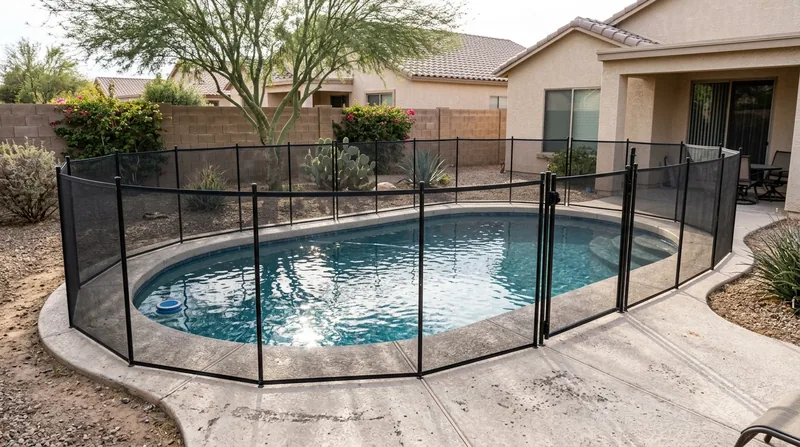




Pool fence installation in Phoenix requires posts set deep through caliche and materials that stand firm against UV and desert heat. Every pool barrier in the city must meet the pool barrier code that applies at your address, and that code is non-negotiable. We install wood, vinyl, aluminum, and mesh pool fencing on the same lots where block walls dominate the streetscape and side yards call for custom enclosures. Our crews set posts in concrete, size the fence to match existing property lines, and pull Arizona 811 utility locates before any hole goes in the ground. Since 2014, we have framed pool barriers across Phoenix and the surrounding valley, working through caliche hardpan and the relentless sun that fades powder coating and splits untreated wood faster than any humidity ever will. A pool barrier is not optional, and it is not a retrofit afterthought: it is code, it is safety, and it must be built to last.
Why Pool Barrier Code Matters in Phoenix
Arizona law sets pool barrier requirements at the state level, and local jurisdictions in the Phoenix area enforce those standards through their building departments. The barrier must prevent unintended access to the water, and the fence is the most common way to do that. Height, mesh size, gate hardware, and post spacing are all specified. A barrier that does not meet code will fail inspection, and a pool without a compliant barrier exposes your household to liability and code enforcement action.
- We install pool fencing to meet local pool barrier codes, with final determination resting with the authority having jurisdiction.
- Posts are set in concrete through caliche to prevent racking and settling that compromise the barrier.
- Gate hardware is self-closing and self-latching so the barrier functions whether you are home or not.
- We pull Arizona 811 utility locates before digging to protect buried lines and avoid costly damage.
- Mesh pool fencing and removable pool fence systems offer flexibility for seasonal pools or restricted yards.
Code compliance is not a suggestion in Phoenix: it is the law, and the fence must be built to hold it.
Key info: Arizona pool barrier code applies statewide, but local enforcement and specific setback or height rules vary by city and county. Verify requirements with your city or county building department before installation. Deed restrictions and HOA architectural standards in master-planned communities like Chandler, Gilbert, and Scottsdale may impose additional limits on height, material, and color.
For detailed Phoenix city requirements, refer to the City of Phoenix Building and Safety Division or contact your local building department.
How We Install Pool Fencing: From Utility Locate to Final Post
Pool fence installation in Phoenix begins with a site visit to confirm property lines, identify utilities, and assess the ground. Caliche is the defining challenge: this cemented hardpan layer stops a standard auger and requires an auger or jackhammer to break through. We set posts in concrete below the frost line, which is not a concern in Phoenix, but is driven by code and the need to anchor against wind and settling. The entire process moves systematically from utility locate to final inspection.
- We schedule an Arizona 811 utility locate and mark all buried lines before any digging begins.
- Posts are positioned to match code spacing and are dug through caliche using power augers or jackhammering where needed.
- Concrete is set around each post to lock it in place and prevent racking that opens gaps in the barrier.
- Mesh, vinyl, wood, or aluminum fencing is attached to posts using galvanized or stainless hardware rated for UV exposure.
- Gates are hung with self-closing, self-latching hinges and tested to ensure they operate smoothly and latch securely.
- A final walk-through confirms that the barrier meets code height, spacing, and hardware standards for your address.
Each step is documented so you have a record of the work and the materials used for future reference or insurance purposes.
Local example: A pool barrier in Tempe or Peoria installed on a typical residential lot with caliche at 18 to 24 inches typically requires jackhammer work to set posts. We budget extra time and equipment for this step, which is why estimates for caliche-heavy lots may run higher than the base per-linear-foot rate. The result is a fence that will not settle or rack as the ground shifts in the desert heat.
For more on how we approach fence installation across different materials and conditions, see our aluminum and ornamental iron fence installation page.
Pool Fence Materials: Wood, Vinyl, Aluminum, and Mesh
| Material | Description | Best for |
|---|---|---|
| Vinyl Pool Fence | PVC panels in white, tan, or gray, no paint or stain required, non-porous so no moisture absorption, fades slowly in Phoenix UV. | Homeowners who want low maintenance and a clean aesthetic that lasts 15 to 20 years with minimal upkeep. |
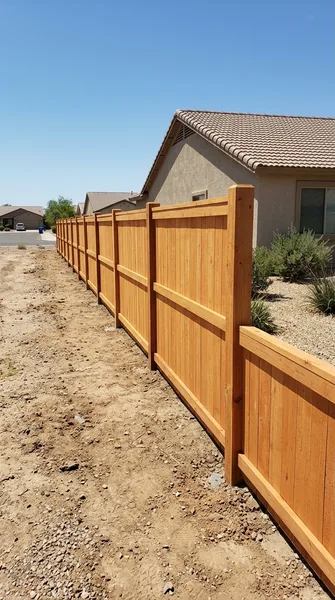
| Wood Privacy Fence | Pressure-treated pine or cedar boards, stained or sealed, provides privacy and a natural look, requires re-sealing every 2 to 3 years in Phoenix's intense sun. | Side yards and pool enclosures where aesthetics match the home, and where the owner commits to maintenance. |
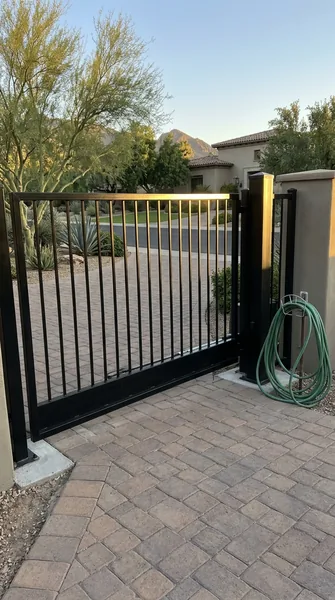
| Aluminum or Ornamental Iron | Powder-coated metal posts and rails, ornamental pickets, no wood to split or rot, durable and elegant, fades over time but does not rust if coating is intact. | Pools in front-facing or prominent locations where the fence is a design feature, and where durability justifies the higher upfront cost. |
| Mesh Pool Fence | Removable or fixed mesh panels that meet code spacing and height, transparent so sightlines are preserved, easy to install and remove seasonally. | Seasonal pools, tight yards, and properties where a permanent fence is not practical or where HOA restrictions limit solid fencing. |
Each material has a place in Phoenix's desert climate. Vinyl and aluminum stand up best to UV without maintenance. Wood requires commitment to re-sealing on a shorter cycle than in wetter climates. Mesh offers flexibility when space or aesthetics demand it. We size the barrier to match the existing property and recommend the material that fits your budget, maintenance tolerance, and code requirements.
Pool Fence Installation Cost in Phoenix: What to Expect
Pool fence installation in Phoenix starts at approximately $38 per linear foot for basic vinyl or wood barriers, and rises from there based on material, site conditions, and complexity. A typical residential pool barrier of 100 to 150 linear feet will run between $3,800 and $5,700 before any site-specific challenges. Caliche, which is nearly universal in the Phoenix area, adds time and equipment cost because posts must be jackhammered through the hardpan layer. Utility locates, gate hardware, and mesh or self-closing hinges also move the number up. The best way to know your actual cost is to request a free estimate and have a crew walk the site.
- Vinyl pool fencing typically costs more upfront than wood but requires no sealing or painting over its 15 to 20 year lifespan.
- Wood barriers are less expensive initially but need re-sealing every 2 to 3 years in Phoenix's UV, which adds maintenance cost over time.
- Aluminum and ornamental iron carry a higher per-foot price but offer durability and a premium aesthetic for prominent pools.
- Mesh pool fencing is the most affordable option and ideal for seasonal pools or tight spaces where removability matters.
- Caliche excavation, jackhammer work, and Arizona 811 utility locates are built into the estimate and reflect the true cost of installation in this region.
Comparing two or three estimates from local installers will show you how material choice, ground conditions, and local labor rates affect the final price. For a detailed pricing breakdown by material and job size, see our full pricing overview.
Cost example: A 120-linear-foot vinyl pool barrier in Mesa or Chandler with standard caliche conditions and a self-closing gate typically runs $4,500 to $5,400. A wood barrier of the same size might start at $3,600, but add $300 to $500 for re-sealing within the first year and every 2 to 3 years after. The true cost of ownership favors vinyl or aluminum in Phoenix's climate.
Pool Fence Installation Near Me: What Phoenix Homeowners Should Know Before Hiring
Hiring a pool fence installer in the Phoenix area means verifying that the contractor is properly insured, understands local code, and has experience working through caliche and desert conditions. Check references, ask for a copy of the company's insurance certificate, and confirm that estimates include Arizona 811 utility locates and all labor for post setting in concrete. If your property is in an HOA community, verify that the fence material and height are approved before work begins. A low estimate that cuts corners on post depth or gate hardware will fail inspection and cost more to fix than the difference in price.
- Confirm that the contractor pulls Arizona 811 utility locates before digging and includes that cost in the estimate.
- Ask whether posts are set in concrete and at what depth, especially important in caliche-heavy areas.
- Request references from recent pool fence installations in your area and ask about experience with code inspections.
- Verify that self-closing, self-latching gate hardware is included and meets the code standard for your jurisdiction.
- Check HOA restrictions and deed restrictions before signing a contract so there are no surprises after the fence is built.
- Get the estimate in writing and confirm that the price includes all labor, materials, utility locates, and any jackhammer or auger work needed for caliche.
The cheapest estimate is not always the best value when it comes to a code-required barrier. A properly built pool fence will pass inspection, hold up in Phoenix heat and sun, and protect your household for years. When you are ready to move forward, contact us for a free estimate and we will walk the site, discuss material options, and give you a firm price with no hidden charges.
Pool Fence Installation in Phoenix: Pricing Guide
| Service | Price | Details |
|---|---|---|
| Vinyl Pool Fence | Starting at $42/ft | PVC panels, no maintenance, includes post setting in concrete through caliche, self-closing gate hardware |
| Wood Pool Fence | Starting at $38/ft | Pressure-treated pine or cedar, stained or sealed, includes concrete post setting, gate hardware, requires re-sealing every 2 to 3 years |
| Aluminum or Ornamental Iron | Starting at $48/ft | Powder-coated metal, durable and elegant, includes post setting in concrete, self-closing gate hardware, minimal maintenance |
| Mesh Pool Fence | Starting at $28/ft | Removable or fixed panels, transparent, meets code spacing, ideal for seasonal pools or tight yards, includes post and frame hardware |
| Caliche Excavation and Utility Locate | Included | Arizona 811 utility locate required by law, jackhammer or auger work for hardpan, built into all estimates for Phoenix area |
| Free Estimate | No charge | Site visit, material review, code verification, written quote within 24 hours at (480) 613-4266, no obligation to book |
Indicative pricing, the exact cost depends on square footage, finish, and site access. Free personalized estimate within 24h at (480) 613-4266.