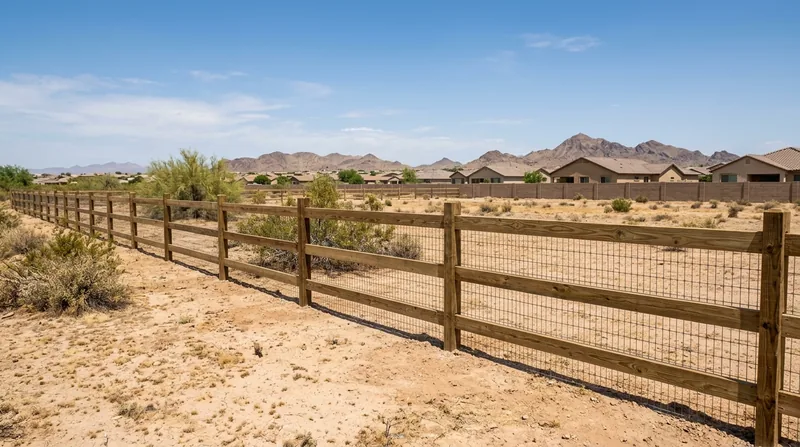




Farm fence installation in Phoenix requires understanding desert ground and wind load on open acreage. Greater Phoenix sits atop caliche, a cemented hardpan that makes digging post holes slow and sometimes demands an auger or jackhammer. The relentless UV and monsoon microbursts that flatten fence runs from June through September are the real design drivers here. We set T-post, wire, and wood rail runs deep enough to hold against open valley wind and seasonal storms. Whether you're fencing pasture, livestock containment, or acreage perimeter, the work is concrete, the ground is hard, and the stakes are real.
Why Farm and Ranch Fencing Matters in Phoenix's Desert Landscape
Maricopa County acreage sits exposed to wind that flat, treeless terrain amplifies. Block walls work for residential neighborhoods, but open ranch ground needs fencing that handles lateral load, not just privacy. Posts set shallow in caliche loosen under monsoon gusts; wire run without proper tension sags within a season. The UV here doesn't rot wood the way humidity does in wetter climates. Instead, untreated wood splits, checks, and loosens at the ground line. A ranch fence that holds in Phoenix is one where posts go deep, concrete is set solid, and materials are chosen for sun exposure, not rot resistance.
- T-posts and wire fencing handle acreage perimeter and livestock containment on a budget and survive monsoon wind when properly braced.
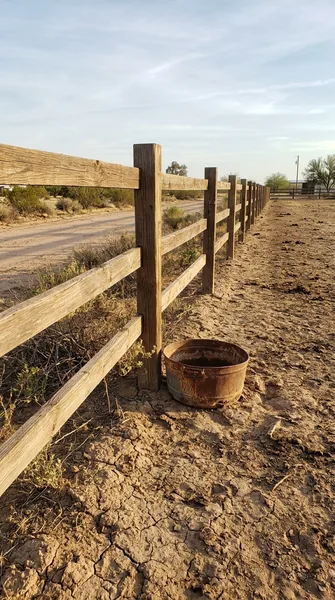
- Wood rail fencing (split rail, pipe, or board) offers durability and visual appeal on smaller pasture runs and higher-value property.
- No-climb horse fence combines wire mesh and board construction to prevent hooves from catching and holds up to equine pressure and desert UV.
- Barbed wire fencing remains the standard for cattle containment across Maricopa County acreage and is installed with proper post spacing and anti-sag bracing.
- Combination runs of wire, rail, and pipe are common on mixed-use properties where livestock, equipment, and visibility all matter.
The right approach depends on what you're containing, how much acreage you're covering, and what the ground will hold.
Key info: Phoenix-area ranch properties often sit on caliche that requires a power auger or jackhammer to reach proper post depth. We verify ground conditions on-site and price accordingly. Shallow post holes fail under monsoon wind; we go deep enough to hold.
Arizona requires a Registrar of Contractors (ROC) license classification R-14 Fencing for metal, wood, and wire fencing work on acreage. More information on contractor licensing is available through the Arizona Registrar of Contractors.
How We Install Farm and Ranch Fencing in Phoenix: From Survey to Completion
We start by walking the property line you identify, checking for utility locates (Arizona 811 is required by law before any digging), and assessing the ground. Caliche depth and hardpan thickness vary across Maricopa County; we verify what we're drilling into and adjust equipment and labor accordingly. Posts are set in concrete at spacing determined by wire gauge, animal type, and wind load. Bracing is installed to prevent sag under lateral stress. Wire is pulled tight and secured with proper tension hardware. The work takes longer than it looks because the ground is hard and the details matter.
- Locate utilities with a free 811 call and mark the property line you want fenced.
- We assess ground hardness, caliche depth, and wind exposure to determine post spacing and bracing strategy.
- Posts are dug to proper depth (often 3 to 4 feet in caliche ground) and set in concrete, not tamped.
- Rails, wire, or boards are installed level and plumb, with anti-sag bracing on long runs.
- Gates are hung and tested; hardware is checked for function before we finish.
- The property line is cleared of debris and the fence is ready for use.
The entire process is slower in caliche than in soft ground, and that's reflected in the estimate. We don't rush post holes in hard pan.
Local example: A 10-acre pasture in Gilbert with sandy caliche and horse containment needs typically runs 1,200 to 1,400 linear feet of no-climb fencing. Posts every 6 feet, set 42 inches deep in concrete, with proper bracing. The job takes 5 to 7 days depending on ground resistance. We've completed similar runs across Chandler, Queen Creek, and Apache Junction acreage.
For detailed pricing on farm and ranch fencing projects, visit our pricing page or request a free estimate for your specific acreage.
Farm and Ranch Fencing Methods and Materials for Desert Acreage
| Approach | Description | Best for |
|---|---|---|
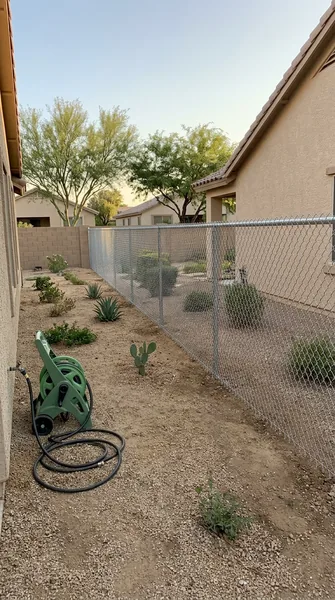
| T-post and wire | Steel T-posts driven or set in concrete with wire mesh or barbed wire strung tight and secured with tension bands and stretcher bar hardware. | Large acreage perimeter, cattle containment, budget-conscious ranch operations on open ground. |
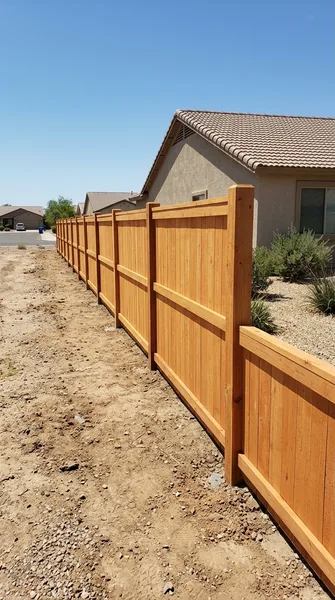
| Split rail and board | Pressure-treated pine or cedar rails mortised into posts set deep in concrete, installed level and plumb with anti-sag bracing on long runs. | Pasture, equine property, smaller acreage where appearance and durability justify higher cost. |
| No-climb horse fence | Wire mesh (typically 2 inch by 4 inch) secured to pressure-treated posts and top and bottom rails, preventing hooves from catching while containing nervous animals. | Horse pastures, equine facilities, high-value property where animal safety and aesthetics both matter. |
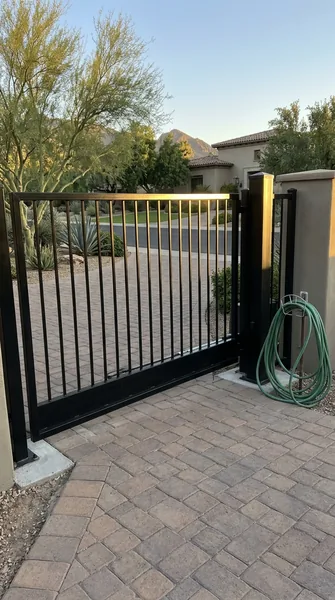
| Pipe and post | Galvanized or powder-coated steel pipe welded or bolted to steel posts, set in concrete with proper bracing for wind and animal load. | High-traffic areas, livestock operations, corral and pen work where durability and repeated use demand metal construction. |
| Barbed wire | Stranded galvanized wire strung tight on properly spaced posts with corner bracing and tension hardware, standard for cattle and open range containment. | Cattle ranching, large acreage perimeter, traditional containment where cost and proven durability are the priorities. |
Each method handles Phoenix's heat, UV, and monsoon wind differently. We recommend the approach that matches your animals, acreage size, and budget.
Farm and Ranch Fencing Cost in Phoenix: What to Expect
Farm fencing in Phoenix starts at approximately $14 per linear foot for basic T-post and wire runs on acreage with manageable ground. The real cost driver is caliche. If your property requires an auger or jackhammer to reach proper post depth, labor per post rises sharply. Split rail or no-climb horse fencing runs higher because of material cost and the extra labor to install rails or mesh. A 1,200-foot pasture run with standard T-post and wire might cost $16,800 to $19,200. The same run in no-climb horse fence could reach $24,000 to $28,800. Barbed wire is cheaper per foot but still requires solid post work and proper bracing.
Factors that move the price up include hard caliche that demands power equipment, gates (which add $1,200 to $3,500 each depending on size and automation), corner bracing and anti-sag hardware, and long runs where wind load requires heavier post spacing. If your acreage has poor access, muddy ground in monsoon season, or existing fence to remove, those add labor and time.
The best approach is to call us at (480) 613-4266 for a free, no-obligation estimate. We walk the property, assess the ground, and give you a realistic number based on what we actually find. Two to three estimates let you compare approach and price. Visit our pricing page for typical costs and what drives variation.
Farm and Ranch Fencing Near Me: What Phoenix Homeowners and Ranchers Should Know Before Hiring
Hiring a fence contractor for acreage is not the same as hiring one for a residential gate. The crew needs to understand caliche, wind load, and animal containment. They need to verify utility locates, respect property lines, and know how to set posts deep enough to hold. Ask if they've worked ranch acreage in Maricopa County. Ask how they handle hard ground. Ask for references from similar jobs. Don't assume the lowest bid is the best one; a bid that ignores caliche depth or post spacing is a bid that will fail under monsoon wind.
Permitting for farm fencing varies by county and city within Greater Phoenix. Some jurisdictions require a permit for any fence over a certain height or for work that exceeds a dollar threshold. HOA rules in master-planned communities can restrict material, height, and color even on acreage. Check with your county assessor or city planning department before we start. We work from the property line you identify and install on that line; a licensed land surveyor is the only professional who can determine a boundary if it's in dispute.
Insurance and contractor licensing matter. Arizona requires an ROC license (classification R-14) for fence work once labor and materials exceed $1,000, or whenever a building permit is required. Ask your contractor if they hold one. We carry full general liability and workers' compensation insurance and can provide a certificate on request.
Get your free estimate today. Call us at (480) 613-4266 or request an estimate online. We'll walk your property, assess the ground, and give you honest guidance on what will hold and what it will cost.
Farm & Ranch Fencing in Phoenix: Pricing Guide
| Service | Price | Details |
|---|---|---|
| T-post and wire fencing | Starting at $14/ft | Basic barbed wire or mesh containment on acreage, includes posts set in concrete and wire strung tight with standard hardware |
| Split rail or board fencing | Starting at $22/ft | Pressure-treated rails mortised into posts, includes anti-sag bracing on long runs and proper concrete post setting |
| No-climb horse fence | Starting at $24/ft | Wire mesh secured to posts and rails, prevents hoof entrapment, includes proper bracing and all hardware |
| Pipe and post corral fencing | On estimate | Galvanized or powder-coated steel pipe welded to posts, price depends on pipe diameter, height, and bracing complexity |
| Caliche drilling and power augering | Added labor cost | Hard ground requires equipment and extra time, factored into estimate once site conditions are verified |
| Free estimate | No charge | Walk-through, ground assessment, and written quote delivered within 24 hours at (480) 613-4266 |
Indicative pricing, the exact cost depends on square footage, finish, and site access. Free personalized estimate within 24h at (480) 613-4266.