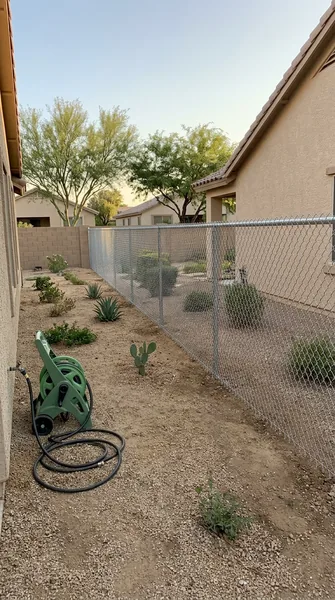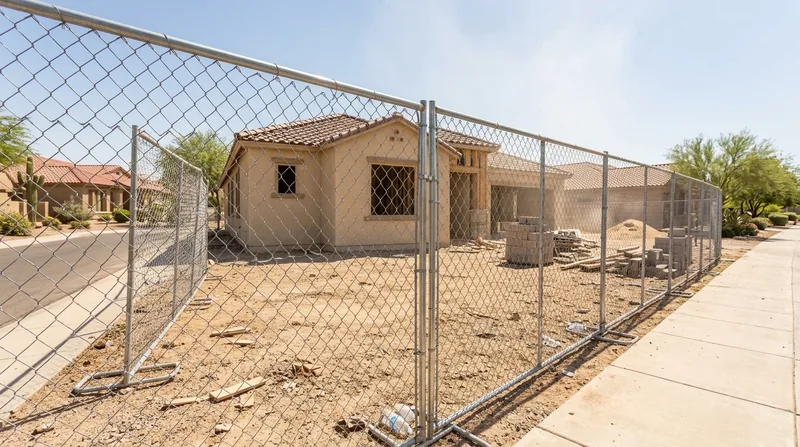




Construction sites, outdoor events, and temporary work zones across Phoenix need commercial fence installation that can withstand monsoon microbursts, blowing dust, and the relentless Arizona heat. Unlike permanent residential fencing, temporary and commercial barriers must go up fast, stand firm under desert wind, and come down or relocate without leaving damage behind. We supply and install commercial chain link fence, panel systems, and silt fence installation on ballast blocks because caliche hardpan makes traditional post holes slow and expensive to dig. Since 2014, we have secured job sites, event perimeters, and construction zones across Phoenix, Glendale, Tempe, Scottsdale, and the surrounding Valley. Our crews understand that your timeline is tight and your budget is fixed, so we deliver barriers that work on day one and hold through the season.
Why Temporary and Commercial Fencing Matters on Phoenix Job Sites
A construction site without proper perimeter control invites trespassers, equipment theft, and liability exposure. Monsoon season from June through September brings wind gusts that topple poorly anchored barriers, and blowing dust clouds obscure sightlines. Construction site fencing must meet city code, keep dust and debris contained, and present a professional appearance to neighbors and inspectors. Ballast-block installation avoids the slow auger work that caliche requires, and chain link or panel systems come down without post removal costs.
- We set panels and chain link on concrete ballast blocks to avoid digging into caliche and to enable quick relocation or removal.
- Temporary fencing meets Phoenix city code for construction site safety and dust control on residential and commercial properties.
- Our crews install commercial security fence systems that deter unauthorized entry and document site boundaries for inspectors and neighbors.
- Ballast-based barriers stand firm in monsoon wind without requiring permanent post holes or concrete removal.
Temporary fencing is not a budget compromise, it is the standard method for job sites where permanence is not needed and speed is.
Key info: Phoenix city code requires perimeter fencing on active construction sites in residential zones. Dust control fencing must extend to property lines and be maintained throughout the project. Check with your local building department for specific setback and material rules in your jurisdiction.
For more on how fencing protects your property year-round, see our fence repair page.
How We Install Temporary and Commercial Fencing in Phoenix
Our process is straightforward and built for desert conditions. We begin with a site walk to assess ground conditions, utility lines, and access points. We then locate underground utilities using Arizona 811 (required by law before any digging), position ballast blocks on firm ground, and secure panels or chain link to the blocks using tension bands and anti-sag bracing. This method avoids the caliche drilling that slows traditional post installation and allows you to move or remove the fence without permanent site damage.
- We call Arizona 811 to locate underground utilities and mark safe zones for any necessary post holes.
- Our crew positions concrete ballast blocks on level ground and sets the fence line according to your site plan and setback requirements.
- We attach chain link mesh or panels to the blocks using galvanized tension bands and stretcher bars for wind stability.
- We install anti-sag bracing on taller runs to keep the fence rigid during monsoon gusts and blowing dust.
- We inspect the completed fence for plumb, sag, and security before we leave the site.
The entire process is fast, clean, and leaves your site ready for work the next day.
Local example: A residential infill project in central Phoenix required dust control fencing along two sides of the lot within 30 days of permit issuance. We installed 180 linear feet of 6-foot chain link on ballast blocks in two days. The fence held through a July microburst and came down in one day when the project ended, leaving no post holes to backfill.
See our chain link fence installation page for details on mesh gauge, height options, and durability in the Phoenix climate.
Temporary and Commercial Fencing Methods and Materials
| Approach | Description | Best for |
|---|---|---|
| Chain Link on Ballast Blocks | Galvanized or vinyl-coated mesh attached to concrete ballast blocks with tension bands and stretcher bars. No post holes required. | Construction sites, temporary event perimeters, dust control on infill projects. Fast setup and removal. |
| Panel Fencing on Ballast | Prefabricated aluminum or vinyl panels mounted to concrete blocks. Provides privacy and a finished appearance. | Events, temporary screening, commercial sites where aesthetics matter. Blocks wind better than chain link. |
| Silt Fence Installation | Sediment control barrier of silt fabric stapled to wooden stakes or wire. Meets stormwater runoff regulations. | Grading and excavation sites, erosion control on slopes. Required by city and county stormwater permits. |
| Permanent Post Installation with Ballast Backup | Posts set in concrete when caliche is not too deep, with ballast blocks as backup or bracing for added wind resistance. | Long-term commercial use, security fencing that must remain stable for months or years. Higher cost, maximum durability. |
Commercial and Temporary Fencing Cost in Phoenix: What to Expect
The cost of commercial fence installation in Phoenix depends on the method, material, height, and total linear footage. Chain link on ballast blocks is the most economical option for temporary work, while panel systems and permanent post installation cost more but offer greater durability or privacy. We provide a free site quote that accounts for ground conditions, wind exposure, utility locations, and your timeline. Getting 2 to 3 estimates helps you compare methods and understand where your money goes.
Ballast-block installation avoids the slow drilling and jackhammer work that caliche requires, which saves time and labor cost on most Phoenix sites. If your project requires permanent posts despite caliche, expect higher labor cost and a longer installation schedule. Event fencing and short-term construction barriers usually run lower per linear foot than permanent commercial security fencing because they do not need deep foundation work.
Call us at (480) 613-4266 for a free estimate tailored to your site conditions, timeline, and budget. Our crews have installed temporary and commercial fencing on residential infill projects in Phoenix, Tempe, and Scottsdale, as well as commercial sites in Glendale, Mesa, and Chandler. We can guide you on whether ballast-block installation or permanent posts make sense for your project and help you understand the trade-offs.
See our pricing page for baseline costs and factors that affect the final bid.
Commercial and Temporary Fencing Near Me: What Phoenix Homeowners and Contractors Should Know
When you hire a contractor for temporary or commercial fencing, verify that they understand Arizona utility location law (Arizona 811 is required before digging), know the setback and height rules for your city or county, and can work within HOA restrictions if your property is in a master-planned community. Ask for references from recent commercial or temporary projects, and request a written scope that specifies the method, materials, linear footage, and timeline. Check that the contractor carries general liability and workers' compensation insurance and can provide a certificate on request.
Many Phoenix sites require a building permit for temporary fencing, especially on residential infill projects or when dust control is mandated by the city. Confirm with your local building department whether your project needs a permit, and ask your contractor to help you understand the requirements. If your site is in a master-planned community, check your HOA rules for fence material, color, and height limits before you finalize your design.
We have been installing fencing in Phoenix since 2014 and hold the American Fence Association member installer credential. Our crews work year-round, including the monsoon season when temporary barriers often fail, and we understand the desert-specific challenges of caliche, UV fade, and wind load. Contact us for a free estimate and honest guidance on the right fencing method for your site.
Commercial & Temporary Fencing in Phoenix: Pricing Guide
| Service | Price | Details |
|---|---|---|
| Chain Link on Ballast Blocks | Free site quote | Temporary fencing cost depends on height, linear footage, wind exposure, and ground access conditions |
| Panel or Privacy Fencing Temporary | Starting at $35/linear foot | Includes ballast blocks, panels, hardware, and labor for setup, removal costs separate if project ends |
| Silt Fence Installation | Starting at $8/linear foot | Sediment control barrier with stakes and silt fabric, meets stormwater permit requirements for grading sites |
| Permanent Post Installation | Starting at $50/linear foot | Posts set in concrete when caliche permits, includes auger or jackhammer work for hard ground |
| Estimate and Site Visit | Free | Response within 24 hours at (480) 613-4266, includes site walk, utility locate call, and written quote |
Indicative pricing, the exact cost depends on square footage, finish, and site access. Free personalized estimate within 24h at (480) 613-4266.