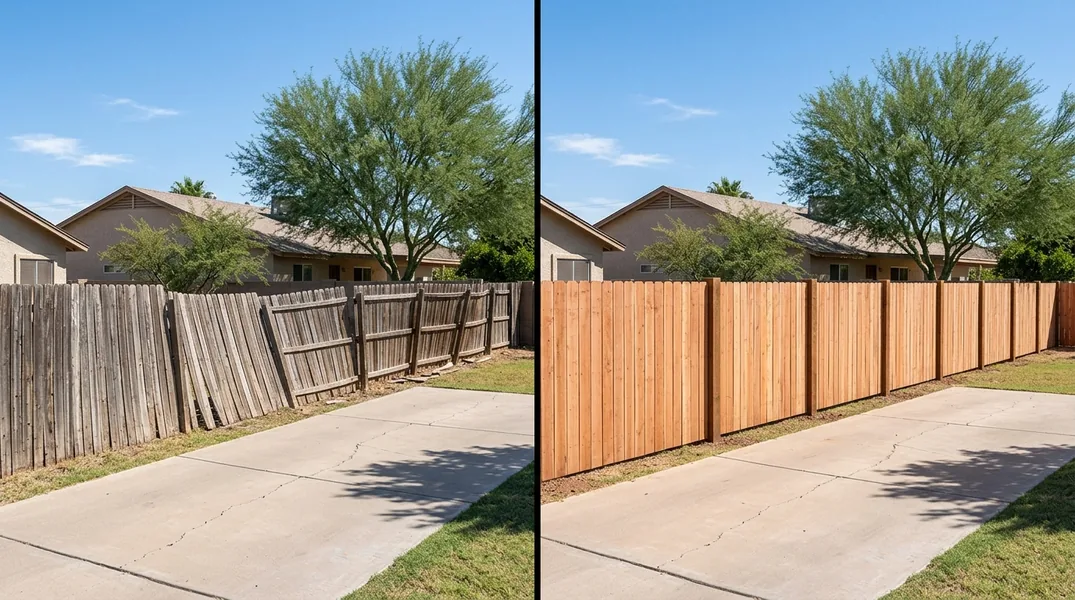
Understanding Caliche Hardpan and Its Impact on Fence Installation
If you're planning a Wood & Privacy Fence Installation in Phoenix, you've likely heard the term caliche hardpan mentioned by contractors. Caliche is a naturally occurring layer of calcium carbonate and other minerals that forms just beneath the soil surface throughout much of Arizona. This dense, concrete-like layer can be anywhere from a few inches to several feet below ground, and it fundamentally changes how fence posts must be installed in our region.
Unlike homeowners in other parts of the country who might dig a simple post hole and set a post in concrete, Phoenix fence installers must account for caliche when planning any fence project. The hardpan layer is so dense that standard drilling equipment often bounces off it, and breaking through requires specialized techniques and additional labor. This geological reality isn't just an inconvenience, it's a critical factor that affects project timelines, pricing, and the overall success of your fence installation. Understanding caliche before you start your project can help you make informed decisions about your fence and avoid unexpected surprises during construction.
Do I Need a Permit for a Fence in Phoenix?
One of the first questions homeowners ask is whether they need a permit for their fence project. The answer in Phoenix is almost always yes, and the permitting process is an essential step that protects both you and your property investment. The City of Phoenix requires fence permits for most residential fence installations, including Vinyl & PVC Fence Installation, Chain Link Fence Installation, and Aluminum & Ornamental Iron Fencing. A permit ensures that your fence meets local codes, respects property lines, and complies with setback requirements that protect utility access and neighbor relations.
The permit process involves submitting plans to the city, which then reviews them against building codes and zoning regulations. This is where caliche hardpan becomes relevant to permitting, because inspectors want to ensure that your fence posts will be properly anchored despite the challenging soil conditions. Phoenix Fence Installers handles the permit application process for our clients, so you don't have to navigate the bureaucracy alone. When you call us at (480) 613-4266, we can discuss your specific project and explain exactly what permits you'll need and what the process timeline looks like.
Fence Height Regulations and HOA Approval in Phoenix
Before you commit to a fence design, it's crucial to understand Phoenix's fence height regulations and whether your homeowners association has additional restrictions. In Phoenix, residential fences are typically limited to six feet in height in the rear and side yards, and three feet in the front yard. However, these regulations exist alongside HOA rules that may be even more restrictive. If you live in a community with an HOA, you'll need to get approval for your fence design, materials, and color before construction begins. An HOA approved fence isn't just a courtesy, it's a requirement that protects your investment and prevents costly removal or modification after installation.
Caliche hardpan adds another layer of complexity to height regulations because deeper post holes are sometimes necessary to achieve proper stability through the hardpan layer. This doesn't typically change the final fence height above ground, but it does affect how deep your posts must be set and how much concrete anchoring is required. When planning your fence project, we recommend checking both city regulations and your HOA guidelines early in the process. Phoenix Fence Installers can help you navigate these requirements and ensure your fence design complies with all local rules before we begin any work.
Fence Permit Cost in Phoenix: What to Budget
Understanding the total cost of your fence project means accounting for permit fees in addition to materials and labor. In Phoenix, fence permit costs typically range from $100 to $300, depending on the scope of your project and the city's current fee schedule. While this may seem like an additional expense, the permit fee is a small investment that ensures your fence is built to code and protects you from potential legal issues down the road. When you receive a quote from Phoenix Fence Installers, we break down all costs transparently, including permit fees, so there are no surprises.
The real cost consideration for most Phoenix homeowners is how caliche hardpan affects labor and material expenses. Breaking through caliche requires specialized equipment like pneumatic drills or hydro-excavation, which adds to the overall project cost. The depth and density of caliche varies across different neighborhoods in Phoenix, so two similar fence projects in different locations might have different final prices. To get an accurate estimate for your specific property and understand how caliche will impact your project cost, we recommend scheduling a free estimate with our team. We'll assess your soil conditions, discuss your design preferences, and provide detailed pricing before any work begins.
How Caliche Affects Post Depth and Installation Techniques
The standard rule of thumb for fence post depth is one third of the post height, which typically means a two foot deep hole for a six foot fence. In Phoenix, however, caliche hardpan often requires posts to be set deeper to achieve adequate stability. When a contractor encounters caliche, they must either drill through it, which is time consuming and requires specialized equipment, or angle the post to bypass the hardpan layer. Neither option is ideal, which is why experienced Phoenix fence installers factor caliche depth and density into their project planning from the start.
Breaking through caliche requires pneumatic drills, hydro-excavation, or other specialized techniques that take additional time and expertise. Some contractors use a method called auger drilling with percussion attachments, while others employ hydro-excavation services that use pressurized water and air to break up the hardpan without damaging surrounding soil. The technique used depends on the caliche depth, the soil composition, and the specific requirements of your fence design. Phoenix Fence Installers has years of experience working with caliche in our region, and we select the most efficient and cost effective method for each project. This expertise ensures your fence posts are set properly for long term stability, even when caliche presents challenges during installation.
Getting Your Fence Project Started: Next Steps
Now that you understand how caliche hardpan, permits, regulations, and costs all factor into your fence project, you're ready to move forward with confidence. The best first step is to schedule a consultation with Phoenix Fence Installers, where we can assess your property, discuss your design goals, and address any concerns about caliche or local requirements. Our team has installed thousands of fences throughout Phoenix and understands the unique challenges our soil presents. Whether you're interested in Wood & Privacy Fence Installation or exploring other options, we're here to guide you through every step of the process.
Contact Phoenix Fence Installers today at (480) 613-4266 to discuss your project, or visit our website to request a free estimate. We'll provide transparent pricing, handle all permits and compliance requirements, and ensure your fence is installed properly despite Phoenix's challenging soil conditions. Your dream fence is within reach, and caliche hardpan doesn't have to be an obstacle when you work with experienced professionals who understand how to navigate it.
Looking for a professional tree service in Phoenix? Phoenix Fence Installers responds fast for all your fence needs.
Get a Free Quote